CASE STUDY

CarGurus: Assisted Search

Senior Product Designer

Prototype

Responsive Web

Year

2025–2026

Industry

AI Product Design

Space of work

Prototype

Timeline

1 quarter

OVERVIEW

CarGurus serves 22 million monthly shoppers on a platform built for browsing, not understanding.

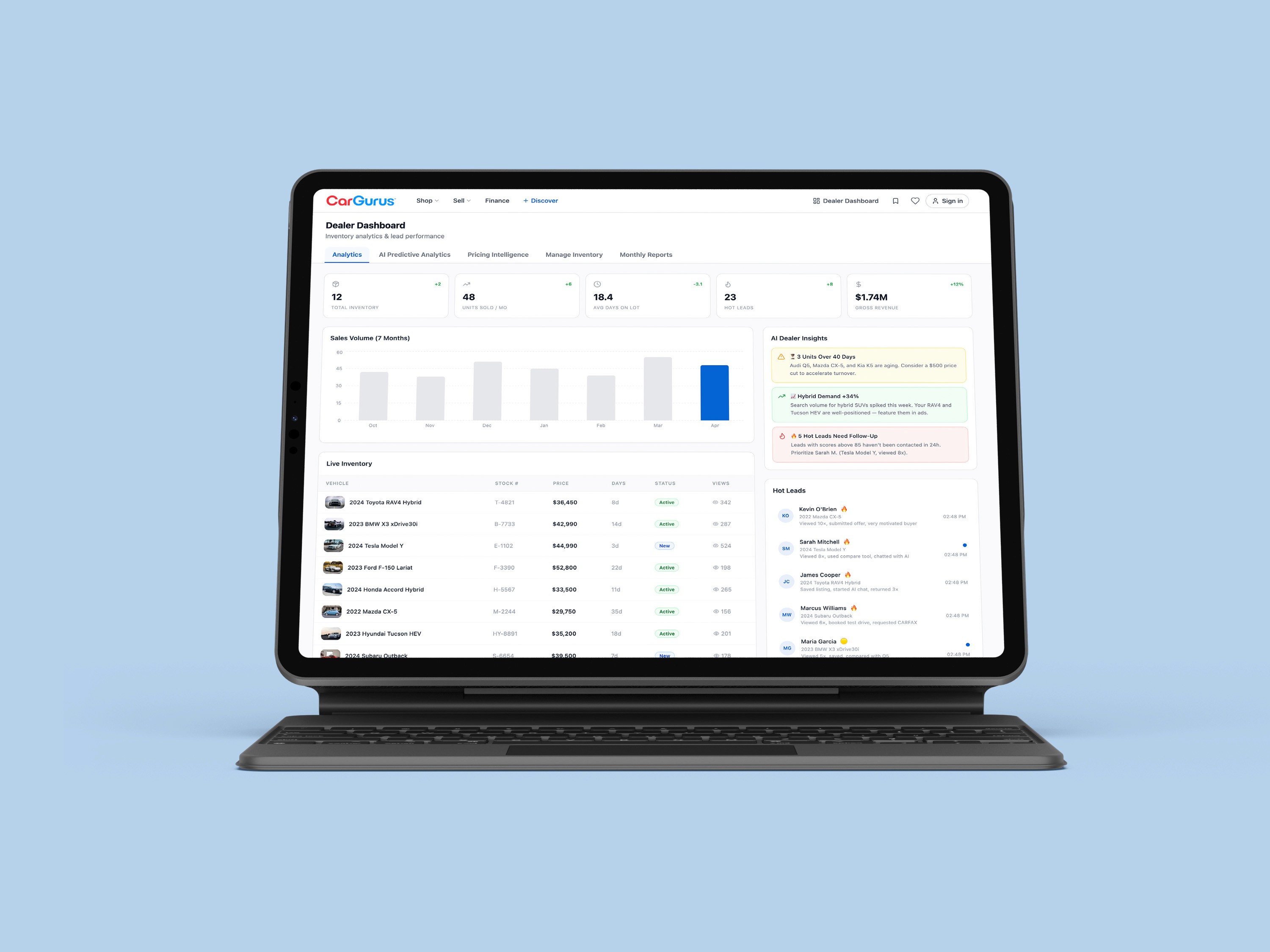
The search experience was fast but limited — it matched keywords, not intent. Dealers had dashboards full of data but no direction on what to act on first. I prototyped an AI layer across three surfaces — the SRP, the Discover page, and the Dealer Dashboard — to test whether the platform could understand what a buyer actually needed and tell a dealer what to do about it. The prototype was built end-to-end in Base44 using real AI inference, then reskinned in Figma using the CarGurus design system and components.

OVERVIEW

CarGurus serves 22 million monthly shoppers on a platform built for browsing, not understanding.

The search experience was fast but limited — it matched keywords, not intent. Dealers had dashboards full of data but no direction on what to act on first. I prototyped an AI layer across three surfaces — the SRP, the Discover page, and the Dealer Dashboard — to test whether the platform could understand what a buyer actually needed and tell a dealer what to do about it. The prototype was built end-to-end in Base44 using real AI inference, then reskinned in Figma using the CarGurus design system and components.

Retro Car

CHALLENGE

Two audiences. The same data. Zero intelligence connecting them.

Auditing both the consumer and dealer journeys revealed the same root problem on both sides: the platform collected behavior but never interpreted it. Buyer intent signals sat idle. Dealer action items were buried in charts. The opportunity was to build one AI layer that translated that data into direction for both audiences at once.

CHALLENGE

Two audiences. The same data. Zero intelligence connecting them.

Auditing both the consumer and dealer journeys revealed the same root problem on both sides: the platform collected behavior but never interpreted it. Buyer intent signals sat idle. Dealer action items were buried in charts. The opportunity was to build one AI layer that translated that data into direction for both audiences at once.

Consumer Pain Points

Buyers described what they needed in full sentences but the search bar only accepted keywords, forcing them to manually translate their intent into filters they did not always know how to use.

Shoppers had no way to understand why a listing was relevant to them. Results appeared ranked by recency or price, with no explanation of fit, deal quality, or how a vehicle matched their specific situation.

First-time and undecided buyers landed on the Discover tab with no guided starting point. The blank search bar asked for specificity that most buyers in research mode did not yet have.

On the Vehicle Detail Page, buyers had access to specs and pricing but no plain-language interpretation of whether the car was actually a good deal for them personally, not just in the abstract.

Dealer Pain Points

Dealers could see inventory data but had no signal telling them which vehicles needed attention first. Aging stock, high-performing listings, and stale leads all looked the same in the dashboard.

Lead lists showed contact history but not buyer intent. A lead who had viewed a listing eight times and used the comparison tool looked identical to one who had clicked once and left.

Pricing decisions required dealers to manually cross-reference market data. There was no system connecting live market pricing to their active inventory with a specific, actionable recommendation.

Monthly performance data existed in tables and charts but required interpretation before it could inform a decision. There was no mechanism to synthesize the numbers into a prioritized action for the coming period.

Key Insight

Auditing both journeys revealed they shared the same gap: the platform collected behavior on both sides but never interpreted it. Every data point a buyer generated was a signal a dealer needed. The opportunity was to connect them through a single inference layer rather than build two separate AI features.

CONSUMER

Meeting buyers at every stage of the search, not just the beginning.

The consumer experience was redesigned around one principle: stop asking buyers to translate their needs into the right filters. The AI layer meets them where they are — whether they arrive with a specific query, a vague sense of what they want, or a listing they are not sure is worth pursuing. Each of the four features addresses a different moment in that decision process.

CONSUMER

Meeting buyers at every stage of the search, not just the beginning.

The consumer experience was redesigned around one principle: stop asking buyers to translate their needs into the right filters. The AI layer meets them where they are — whether they arrive with a specific query, a vague sense of what they want, or a listing they are not sure is worth pursuing. Each of the four features addresses a different moment in that decision process.

Retro Car
Consumer Key Features

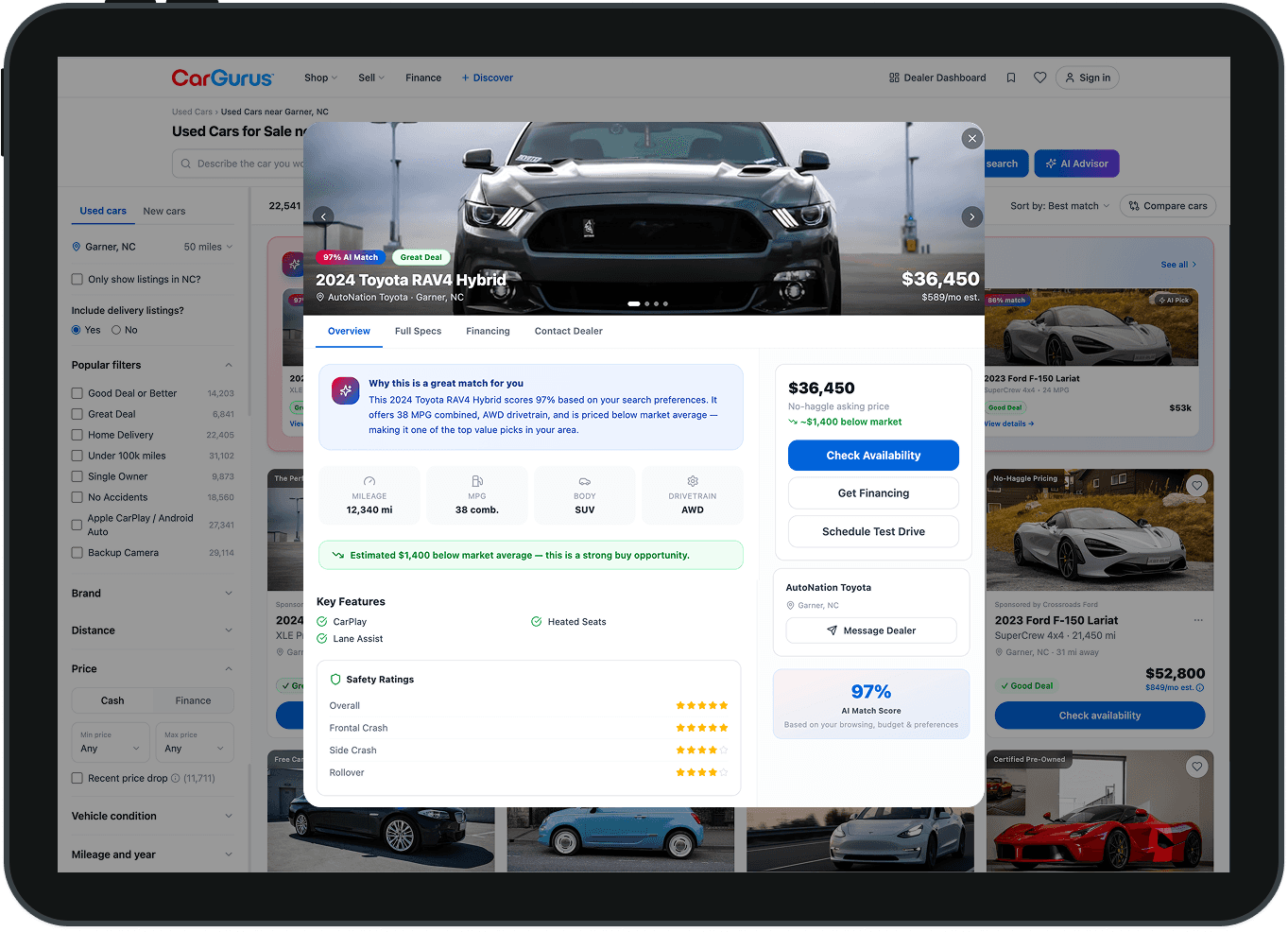
AI Top Picks ranks every listing by match percentage based on the buyer's search behavior and preferences, surfacing the most relevant vehicles before a single filter is touched.

The AI Advisor flyout lets buyers ask questions in natural language from any page, comparing saved vehicles, questioning a deal rating, or exploring alternatives at a different price point.

The Discover tab replaces the blank search bar with a short preference-capture conversation. Four questions produce a ranked shortlist with a plain-language explanation for each result.

The Vehicle Detail Page AI Summary gives buyers a buyer score, a one-sentence verdict, and a pros and cons breakdown grounded in the vehicle's specs, pricing position, and local market data.

BASE 44 PROTOTYPE

From Ideation to Prototype

BASE 44 PROTOTYPE

From Ideation to Prototype

DEALER

Turning the dealer's existing data into a prioritized list of what to do next.

The dealer experience was redesigned around the same principle applied in reverse: stop displaying data and start delivering decisions. Dealers already had the raw material — inventory metrics, lead activity, market pricing, monthly performance. What they lacked was interpretation. Each of the four dealer features converts one category of existing data into a specific, actionable output.

DEALER

Turning the dealer's existing data into a prioritized list of what to do next.

The dealer experience was redesigned around the same principle applied in reverse: stop displaying data and start delivering decisions. Dealers already had the raw material — inventory metrics, lead activity, market pricing, monthly performance. What they lacked was interpretation. Each of the four dealer features converts one category of existing data into a specific, actionable output.

Dealer Key Features

AI Dealer Insights surfaces three plain-language alerts ordered by urgency: aging inventory with a price-drop recommendation, demand signals from buyer search behavior, and lead flags for buyers who have crossed an intent threshold.

AI Predictive Analytics generates a six-month sales forecast and ranks the lead list by close probability, factoring in browsing behavior, comparison usage, and save activity rather than just time since last contact.

Pricing Intelligence plots each active vehicle against the local market average and assigns a competitive status. Clicking AI Advice opens a modal with a plain-language rationale specific to that vehicle's mileage, model year, and local demand.

The AI Executive Summary generates a paragraph from the month's performance data identifying what performed, what underperformed, and what to prioritize next. It is regenerable after adjustments.

Retro Car
Key Insight

The most valuable thing AI can do for a dealer is not surface more data. It is tell them what to do next and explain why, in plain language, before they have to ask.

FIGMA RESKIN

From Base44 prototype to CarGurus design system.

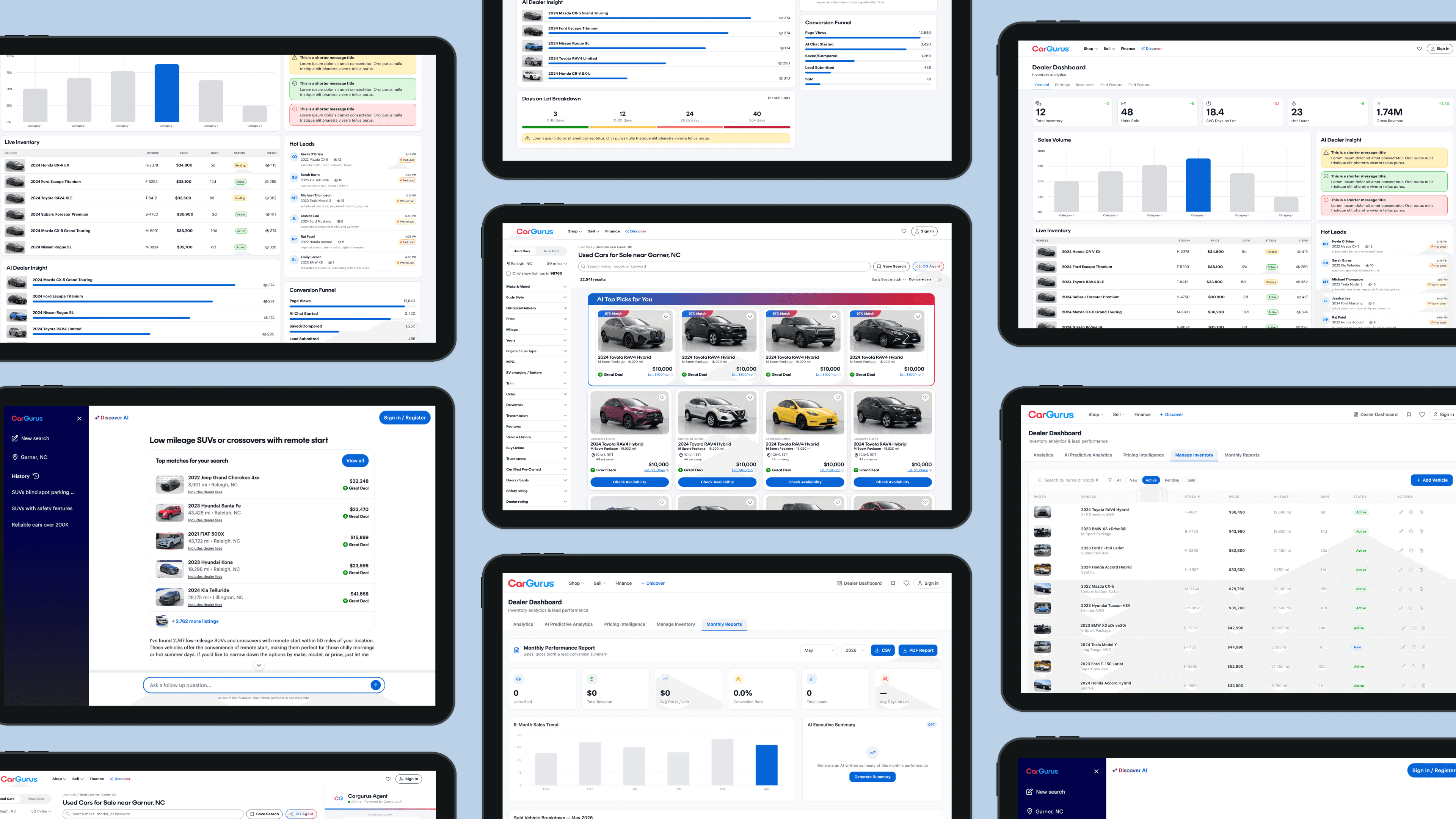
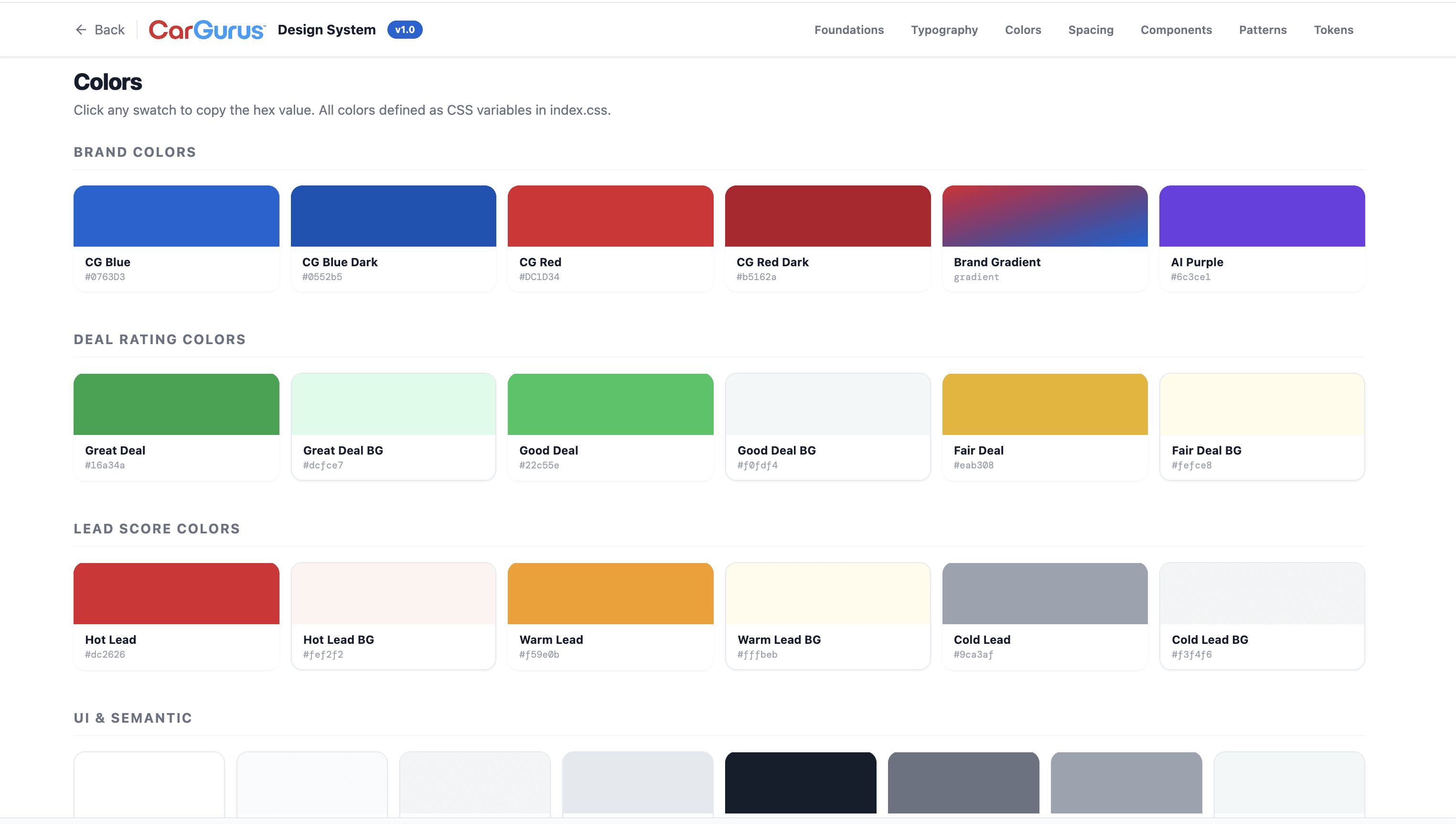
The prototype was initially built in Base44 using real AI inference to validate the concept with working behavior rather than scripted responses. Once the core interactions were proven, the experience was reskinned in Figma using the actual CarGurus design system and production components. This brought the prototype into alignment with the platform's live component library, spacing tokens, and typography, making the handoff to engineering a direct conversation rather than a translation exercise. The AI-powered SRP search is the first feature from this work currently live in production.

FIGMA RESKIN

From Base44 prototype to CarGurus design system.

The prototype was initially built in Base44 using real AI inference to validate the concept with working behavior rather than scripted responses. Once the core interactions were proven, the experience was reskinned in Figma using the actual CarGurus design system and production components. This brought the prototype into alignment with the platform's live component library, spacing tokens, and typography, making the handoff to engineering a direct conversation rather than a translation exercise. The AI-powered SRP search is the first feature from this work currently live in production.

Retro Car
Retro Car
Retro Car

KEY LEARNING

Four things the prototype confirmed that I did not expect going in.

KEY LEARNING

Four things the prototype confirmed that I did not expect going in.

  1. Both sides read the same signal

Consumer and dealer features were drawing from identical behavioral data. A buyer saving a listing three times is the same signal a dealer needs. Designing both in parallel made that connection visible.

  1. Real AI changes how you design

Base44 ran real inference, not scripted outputs. The Advisor returned answers I did not anticipate, which forced me to design recovery paths I would have otherwise skipped.

  1. Output format is a design decision

The Vehicle Summary went through four rounds of refinement before it stopped reading like a spec sheet. Treating the AI output format with the same care as the UI around it is a content design problem, not a prompt engineering one.

  1. Dealers act on urgency, not categories

The first version of AI Dealer Insights organized alerts by type. Every dealer asked the same question: which one do I do first? Reordering by urgency instead of category made the feature feel like it understood the job.